
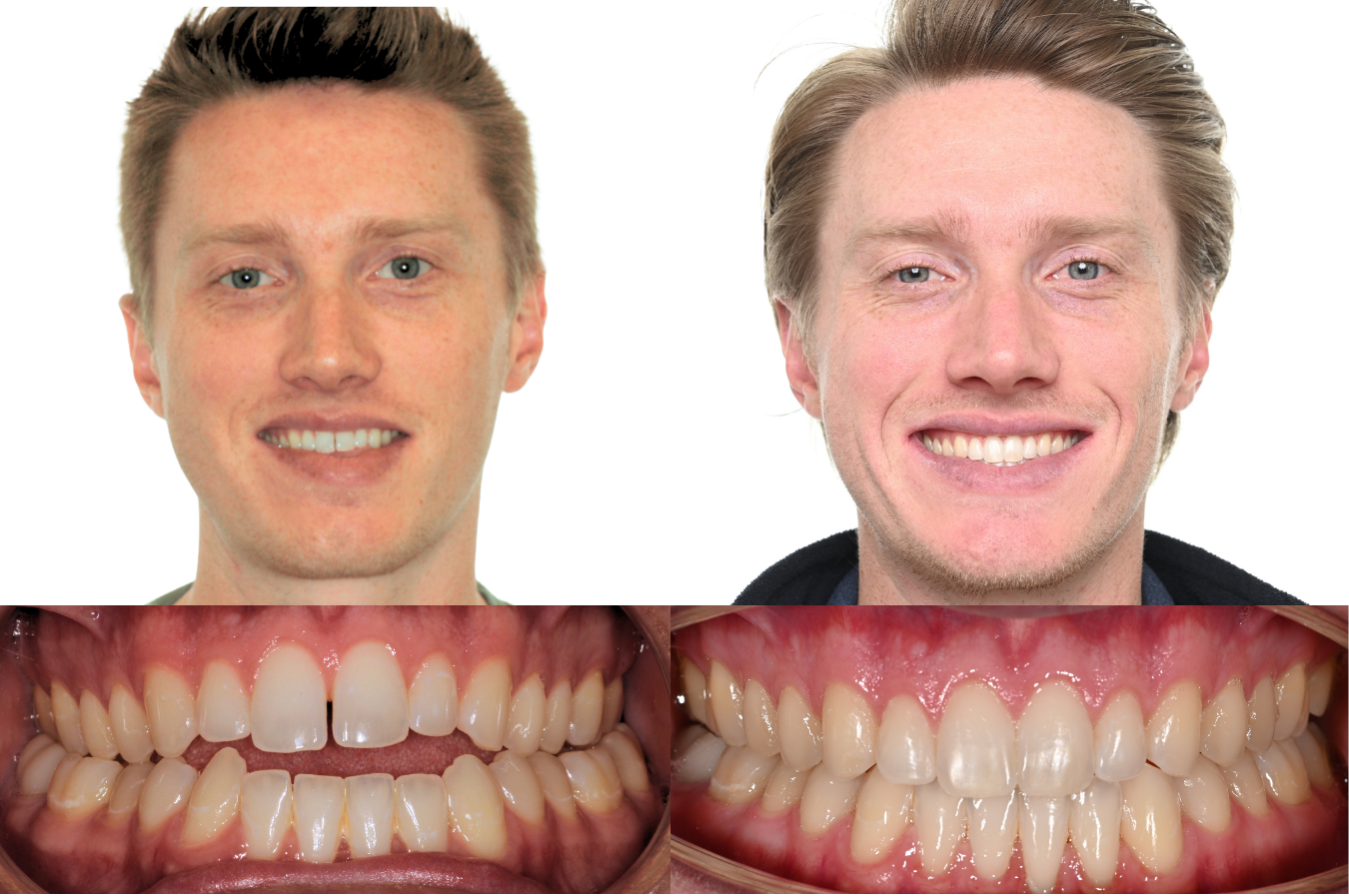
If you have been reading about adult palate expansion, you have seen both acronyms and probably assumed they were competing appliances. They are not. They are the same idea with different tempos.
- MARPE — Miniscrew-Assisted Rapid Palatal Expansion
- MASPE — Miniscrew-Assisted Slow Palatal Expansion
Same miniscrew anchorage into the palate. Same goal of true skeletal expansion. The variable is how quickly you turn the appliance, and that variable changes the result more than most patients expect.
What MARPE is
MARPE treatment is a minimally invasive skeletal expansion technique that widens the upper jaw using mini-implants anchored directly to the palate. It is an effective non-surgical option for teens and adults seeking bite correction, airway development, and relief from constricted airways or obstructive sleep apnea.
MARPE is the reason adult expansion stopped being a surgery-only conversation. It genuinely advanced modern airway orthodontics.
What MASPE is
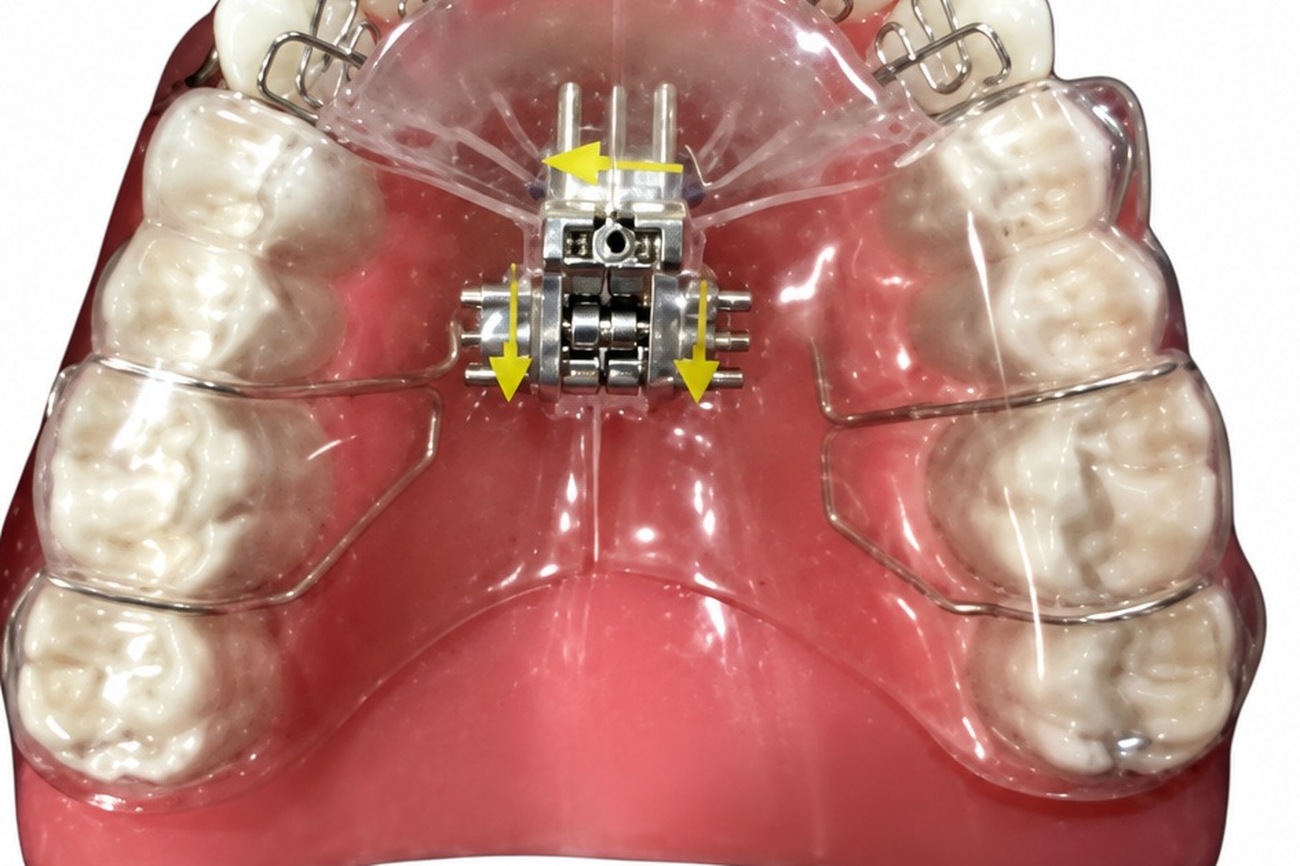
MASPE gradually expands the upper jaw using the same miniscrew anchorage with slower, more controlled activation protocols.
We prefer a MASPE approach. Slower expansion is often more predictable, creates more symmetrical skeletal changes, improves long-term stability, and reduces complications by allowing the bone and soft tissues more time to adapt during treatment.
Why slower wins more often
Rapid protocols ask the mid-palatal suture, the surrounding bone and the soft tissue to accommodate a lot of change in a short window. When anatomy cooperates, that is fine. When it does not, you see the classic problems: asymmetric splitting, one side moving more than the other, and results that are harder to hold.
Giving the tissues time changes the odds on four things at once:
| Rapid protocol | Slow protocol | |
|---|---|---|
| Predictability | Less predictable in older patients | More predictable |
| Symmetry | Asymmetric expansion is a known risk | More symmetrical skeletal change |
| Long-term stability | Lower | Improved |
| Complications | Higher | Reduced — tissues adapt as they go |
Why we still say "MARPE"
Language lags behind technique. While Dr. Fanelli uses a slower (MASPE) approach, the term "MARPE" is still commonly used to refer to both techniques. If you were referred to our office for MARPE, or you found us searching for MARPE, you are in the right place — the appliance is the same, the protocol is slower and more deliberate.
If you are still comparing appliance categories, start with how MARPE and MASPE compare to ALF, DNA and Vivos.

What actually drives the outcome
The turn schedule is one input. Three others matter just as much.
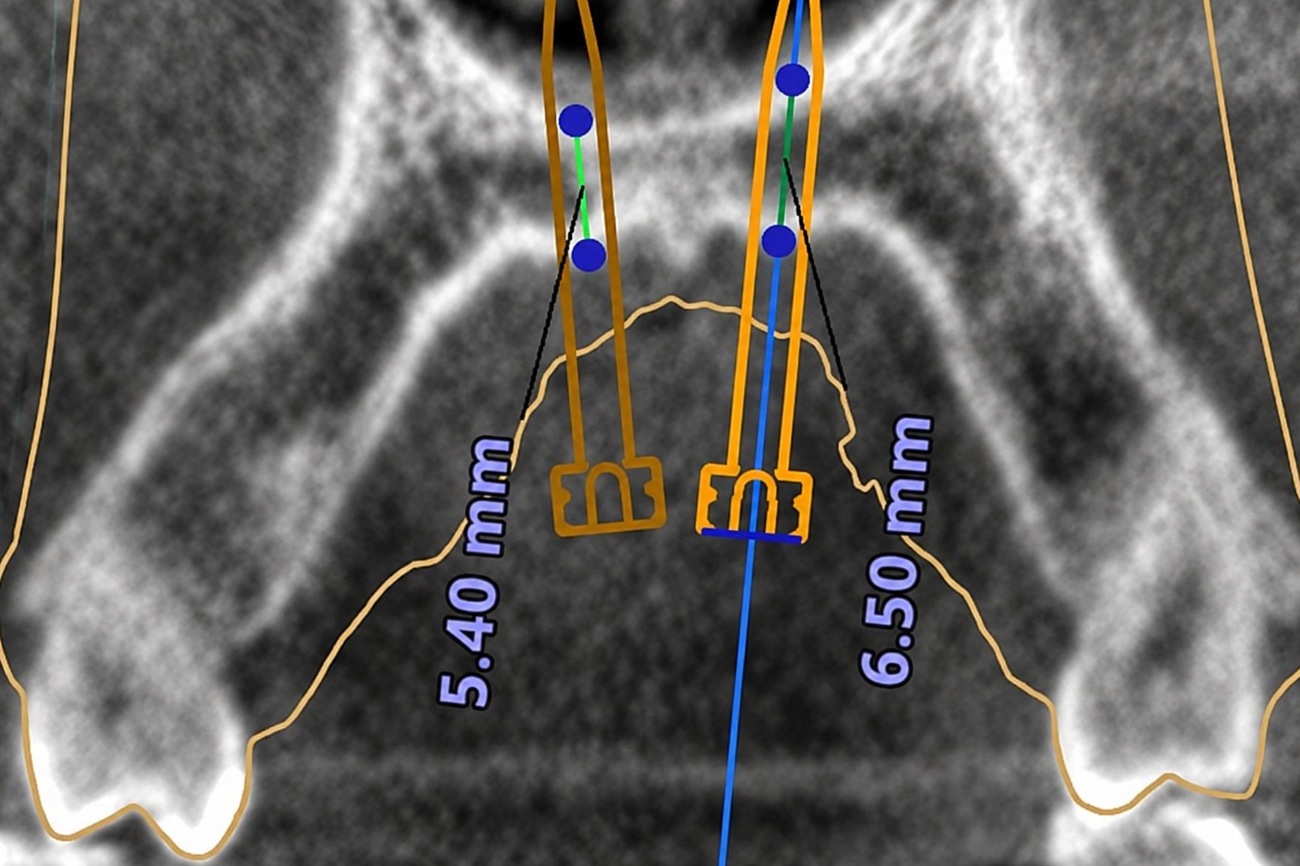
Diagnosis in three dimensions. Every appliance is designed from a combination of 3D X-rays, digital intraoral scans and the patient's treatment goals. The CBCT shows bone anatomy, airway and skeletal structure; the scan captures the exact shape of the teeth and palate. That is what makes accurate fit and predictable expansion possible.
Appliance design. Miniscrew position and length are planned against the patient's actual palatal bone, not a stock template.
Piezo corticotomy, when it is indicated. For some older teens and adults, a minimally invasive procedure using precise ultrasonic technology makes a small incision to the bone of the palate so the upper jaw expands more evenly and with less resistance. It can improve the quality of the expansion, reduce unwanted pressure on the teeth, and support more stable, symmetric results.
Monitoring. Patients submit weekly progress photos so asymmetric expansion or other concerns get caught early rather than at the end.
What patients actually ask
How do you manage the pain?
Start ibuprofen the afternoon before insertion. On the day of insertion and the following day, Tylenol and ibuprofen may be alternated as needed for pain and inflammation.
How long does the appliance stay in?
Typically 6 months to 1 year, depending on how much expansion is needed and how long the new bone takes to stabilize.
How long until I get a "split"?
Most patients see separation of the maxilla within 2–4 weeks of starting expansion.
How do you handle the risks?
Careful planning, customization and close monitoring: slow expansion protocols, piezo corticotomy where appropriate, a custom appliance built from your own 3D imaging, and weekly progress photos. Our airway orthodontics workup drives every one of those decisions.
Finishing the case
Expansion is the foundation, not the finish. After skeletal expansion, treatment is completed with either braces or clear aligners.
Clear aligners are often preferred for their precision and customization — a fully digital, individualized plan that controls tooth movement predictably and complements the expanded arch, while being more esthetic, removable and generally more comfortable. Braces may still be the better call when significant skeletal asymmetries are present at the start, or when there are concerns about consistent aligner wear.
Not sure whether you are a candidate at all? Start with whether MSE/MARPE is right for you.
Schedule a consultation
If you are an adult who has been told expansion is not possible without surgery, that answer is a decade out of date. Schedule a consultation with Dr. Chris Fanelli at Albrechtsen & Fanelli Orthodontics — South Ogden, Farr West and Morgan — at (801) 479-9800.