
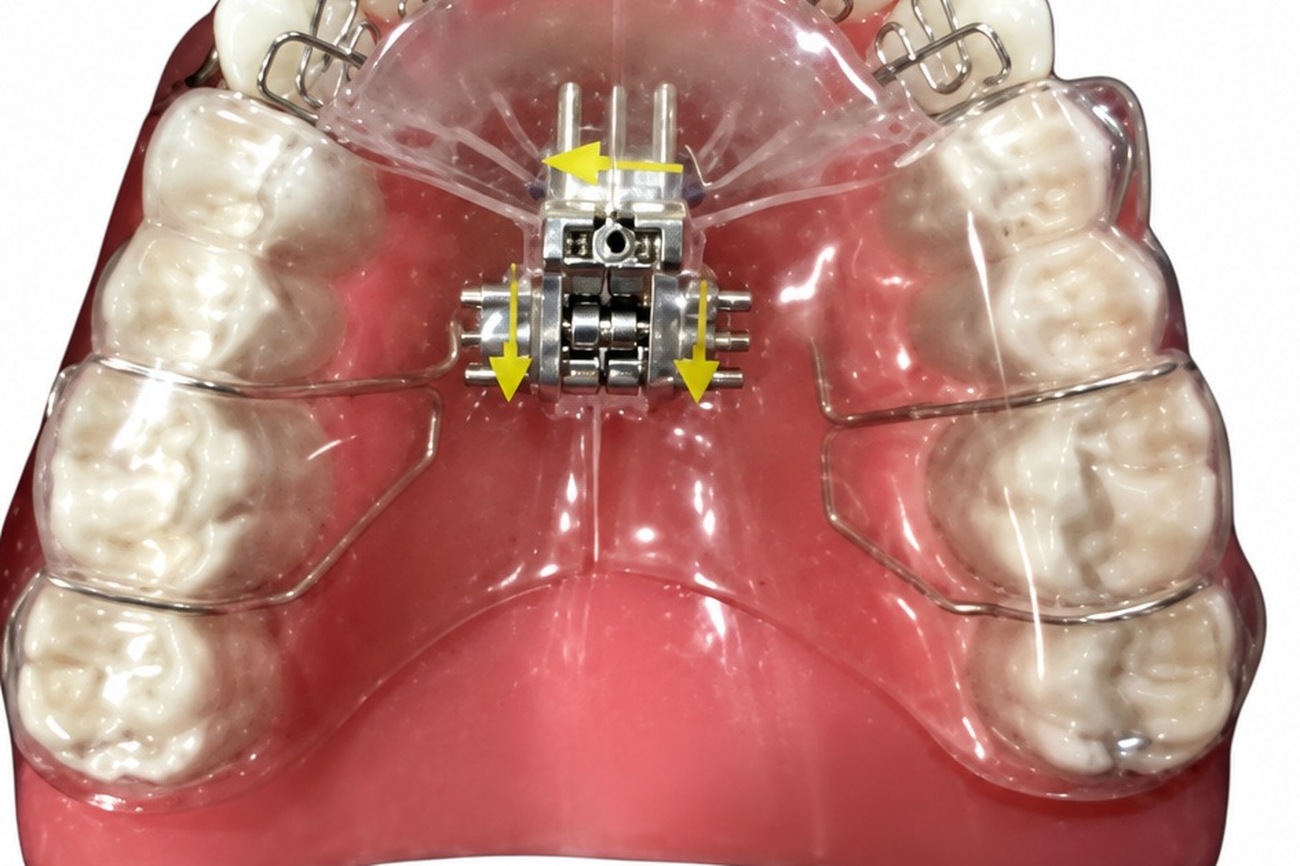
If you have been researching how to widen your upper jaw as an adult, you have probably run into a wall of acronyms: ALF, DNA, Vivos, AGGA, MSE, MARPE, MASPE. The marketing around them sounds interchangeable. The biology is not.
There is one question that separates every appliance on that list into two groups: does it move teeth, or does it move bone?
Once you understand that split, the choice gets a lot simpler — and so does the conversation you have with whichever doctor you end up seeing.
Two very different things get called "expansion"
Dental expansion creates arch width by tipping teeth outward. The appliance pushes on the teeth, the teeth lean out, and the arch measures wider on a model. The bone underneath has not changed.
Skeletal expansion separates the two halves of the maxilla — the actual upper jaw bone — and widens the foundation. The teeth come along because the bone they sit in moved.
Both make the arch wider on paper. Only one of them widens the floor of the nose, and only one of them is stable long term in a jaw that has stopped growing.

Where ALF, DNA, Vivos and AGGA fall
Tooth-borne appliances such as VIVOS, AGGA, ALF and DNA primarily create arch width by tipping teeth outward rather than producing true skeletal expansion of the maxilla.
That matters more than it sounds. Because these appliances rely on dental movement, they can push teeth beyond their natural bony support. The risks that come with that are well known in orthodontics:
- gum recession
- bone loss around the roots
- root damage
- long-term instability, meaning the width relapses
None of that makes these appliances useless in every situation. It makes them the wrong tool when the actual problem is a narrow jaw rather than narrow-looking teeth.
What MARPE and MASPE do differently
When true skeletal expansion with MARPE is needed in older teens and adults, MARPE and MASPE are the only non-surgical treatment options capable of expanding the maxilla.
Instead of pushing on teeth, these appliances anchor directly into the palatal bone with mini-implants. The expansion force goes into the bone. The result is true skeletal expansion, with far fewer of the unwanted dental side effects, and better preservation of long-term dental and periodontal health.

Why the airway is part of this conversation
Widening the upper jaw widens the floor of the nose, because they are the same structure.
Studies show that for every 1 mm of palatal expansion, nasal cavity width increases by about 2.3%, which can significantly reduce nasal resistance and improve airflow through the nose. Those skeletal changes also support better tongue posture and oral function, which reinforces nasal breathing.
This is why patients dealing with chronic mouth breathing, snoring, or a diagnosis of obstructive sleep apnea or sleep-disordered breathing often end up seeking an airway-focused orthodontic evaluation in the first place. An appliance that only tips teeth does not change the nasal floor. An appliance anchored in bone can.
A note on growing patients
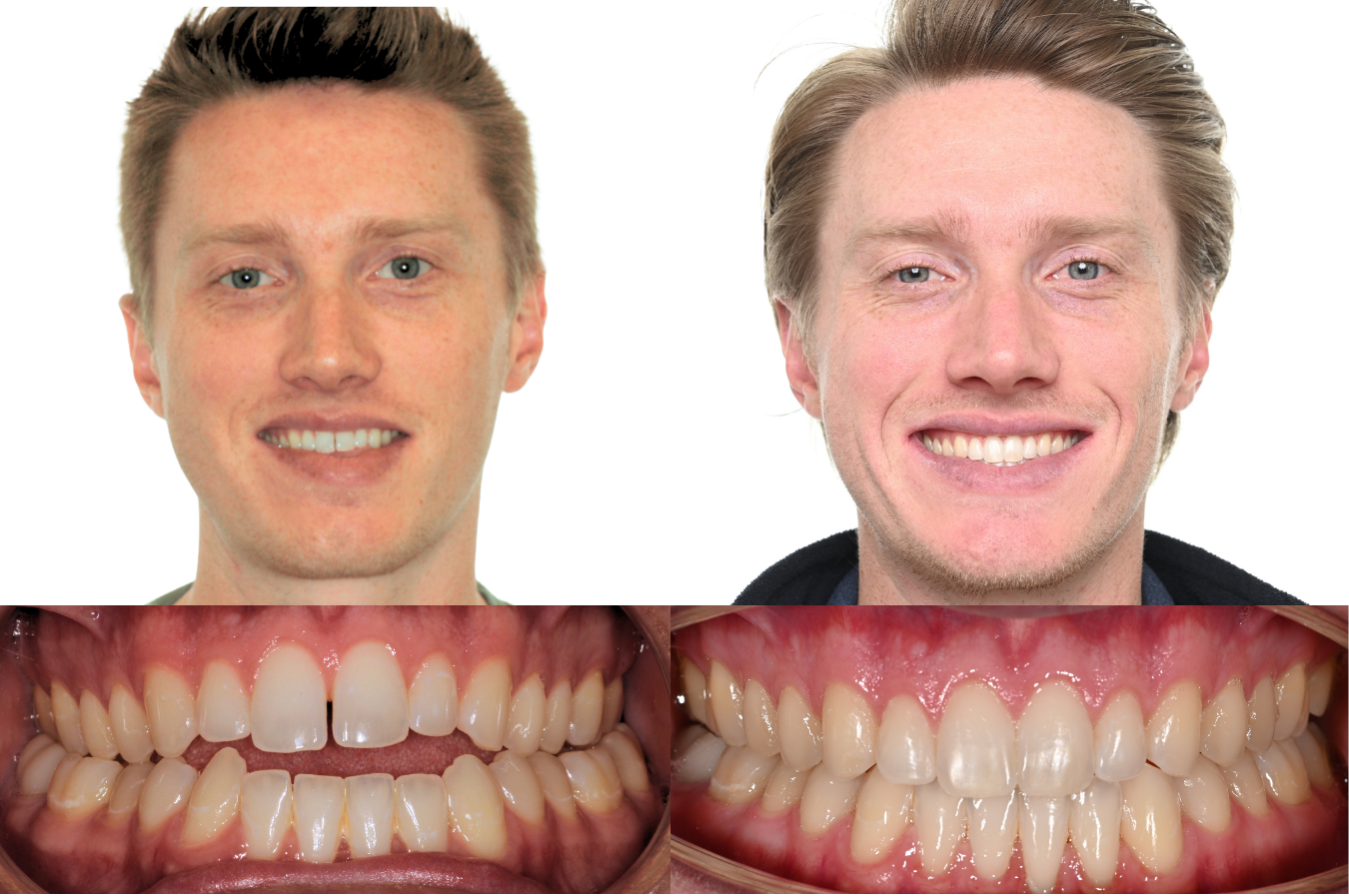
If the patient is still growing, this whole comparison changes. In growing patients, a conventional RPE or a clear aligner–based expander can widen the upper jaw and the floor of the nose without miniscrews, because the mid-palatal suture has not fused yet. Skeletal expansion is comparatively easy at that age.
MARPE and MASPE exist for the patients who missed that window — older teens and adults whose suture has interlocked and who would otherwise be told their only option is jaw surgery.
The honest short list for an adult with a narrow upper jaw
- Tooth-borne appliances (ALF, DNA, Vivos, AGGA) — dental tipping, with real periodontal risk when pushed past the bone.
- MARPE / MASPE — true non-surgical skeletal expansion, anchored in the palate. If you want the patient-side view of that process, here is what MSE/MARPE treatment actually involves.
- Surgically assisted expansion or orthognathic surgery — appropriate for severe skeletal cases.
- ENT or allergist referral — if tonsils, adenoids, nasal obstruction, chronic congestion or allergies are contributing to mouth breathing, expansion alone will not solve it.
The part nobody markets: diagnosis
Every patient has a unique combination of facial structure, airway, bite and skeletal relationships, so there can be multiple reasonable ways to approach treatment. But there is only one correct diagnosis for each individual, and that diagnosis is what determines the true cause of the problem.
That is why the workup matters more than the appliance name. A proper evaluation includes facial balance, bite, airway function and oral habits, followed by CBCT 3D imaging and digital intraoral scans — a three-dimensional look at the teeth, jaws and airway before anything gets cemented in.
If a practice can tell you which appliance you need before it has looked at your bone in 3D, that is a sales process, not a diagnosis.
Traveling for this
Skeletal expansion in adults is a narrow specialty, and patients regularly travel to find someone who does it routinely. If you are weighing options, the questions worth asking any provider are:
- Do you take a CBCT before recommending an appliance?
- Is the appliance anchored in bone or on teeth?
- How is the appliance designed for my anatomy specifically?
- How do you monitor for asymmetric expansion during treatment?
The tempo of the expansion matters too — that is the difference between MARPE and MASPE protocols.
Schedule a consultation
Dr. Chris Fanelli is a board-certified orthodontist with extensive continuing education in MARPE, facial esthetics, and the diagnosis and management of sleep apnea in adults and children. Schedule a consultation at Albrechtsen & Fanelli Orthodontics — South Ogden, Farr West and Morgan — at (801) 479-9800.