
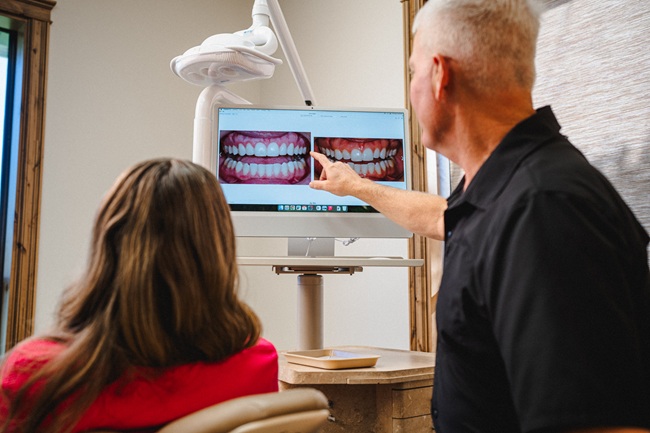
Most people think of orthodontics as a way to straighten teeth and enhance a smile—but did you know that bite alignment plays a crucial role in how your body breaks down food and absorbs nutrients?
Proper chewing is the first step in the digestive process. When your bite works well, your teeth and jaws can efficiently break down food into smaller pieces, making it easier for your stomach and intestines to digest and absorb nutrients. However, when your bite is misaligned—whether due to crowding, an overbite, underbite, or another malocclusion—it can compromise chewing efficiency. Over time, this can contribute to digestive discomfort, nutrient malabsorption, and even gastrointestinal issues.
In this blog, we’ll explore how orthodontic treatment impacts chewing and digestion, why bite alignment is more than just aesthetics, and how correcting your bite can support your nutrition and overall health.
Why Chewing Matters
Chewing is more than just taking bites of food—it’s your body’s first line of digestion. When you chew properly:
- Saliva mixes with food to begin breaking down carbohydrates
- Food is mechanically reduced into smaller, more digestible pieces
- The stomach and intestines have less work to do
- Nutrients can be more efficiently absorbed
But when chewing is compromised due to bite misalignment, your body’s digestive system has to work harder—sometimes leading to symptoms like:
- Gas or bloating
- Acid reflux
- Undigested food in stools
- Nutrient deficiencies
- Sluggish digestion
Proper bite alignment supports smooth, efficient chewing, which has a ripple effect throughout the digestive process.
How Bite Misalignment Affects Chewing
• Uneven Pressure on Teeth
When your bite doesn’t fit together correctly, certain teeth bear more force than others. This can make chewing less efficient and cause pain or discomfort.
• Limited Range of Motion
Malocclusions can restrict how far or smoothly your jaw opens and closes, making it harder to break down food thoroughly.
• Muscle Fatigue
Poor bite alignment can strain the muscles used for chewing, making the process tiring—or even painful—especially when eating tougher foods.
• Jaw Joint Strain
Imbalanced chewing patterns can stress the temporomandibular joint (TMJ), which may lead to discomfort and further reduce chewing efficiency.
All of these factors influence how well food is prepared for digestion, and over time can affect your gut health and nutrition.
Orthodontics Enhances Chewing Efficiency
Orthodontic treatment isn’t just about straight teeth—it's about functional alignment. When your teeth and jaws work together properly, your chewing becomes smoother and more efficient.
Here’s how orthodontics supports digestive health through improved bite function:
Aligning Teeth for Balanced Chewing
Braces or clear aligners reposition teeth into proper alignment so that chewing forces are distributed evenly across all teeth.
Correcting Bite Relationships
Orthodontic treatment can fix overbites, underbites, crossbites, and open bites—all of which influence how upper and lower teeth meet during chewing.
Supporting Jaw Position and Function
A properly aligned jaw reduces strain on chewing muscles and joints, allowing you to masticate food more completely.
Helping With Food Breakdown
With improved bite alignment and stronger chewing function, food is broken down into smaller particles—giving your stomach and intestines a better starting point for digestion.
Real-Life Benefits of Better Bite Alignment
When orthodontic treatment improves how you chew, the effects can be felt in everyday life:
- Fewer digestive upsets like bloating and gas
- Comfort eating a wider variety of foods
- Less jaw and muscle fatigue after meals
- Better nutrient absorption due to improved breakdown
- Increased enjoyment of food textures
For children, efficient chewing supports growth and nutrient uptake—while adults often notice reduced digestive complaints after jaw alignment improves.
Who Should Consider Orthodontic Evaluation?
Several signs may indicate that your bite and chewing efficiency could be improved:
- You frequently chew on one side only
- You have pain or discomfort when chewing
- You notice unexplained digestive issues
- Your teeth wear unevenly or feel sensitive
- You avoid certain foods because they’re hard to chew
- You have a known bite issue like an overbite, underbite, or crossbite
If you’re experiencing any of these, an orthodontic evaluation can help determine whether treatment could make chewing—and digestion—more efficient.
Orthodontic Treatment Options for Better Bite Function
Depending on your needs, several orthodontic options may help optimize chewing and bite alignment:
- Braces: Effective for correcting complex misalignments
- Clear Aligners: Comfortable and discreet way to shift teeth
- Expanders: Create space for proper jaw and tooth alignment
- Retainers: Maintain alignment after active treatment
- Functional Appliances: Guide jaw growth in children
Your orthodontist will recommend the best plan to support both your smile and your functional needs.
Final Thoughts — Better Bite, Better Digestion
Orthodontics may not be the first thing you think of when considering digestive health, but an aligned bite sets the stage for efficient chewing—the first step in a smooth digestive process. When your teeth and jaws work together properly, your body can break down food more effectively, support nutrient absorption, and help reduce common digestive complaints.
If you’ve been experiencing digestive discomfort or chewing challenges, it’s worth exploring how orthodontic treatment could be the key to improving both your bite and your overall health.
At Albrechtsen & Fanelli Orthodontics in Ogden, we focus on function and aesthetics. Our team will assess your bite, jaw alignment, and chewing function to determine the best approach to support your long-term health—not just your smile. Schedule a free consultation today to learn how improving your bite might help support better digestion and nutrition.