
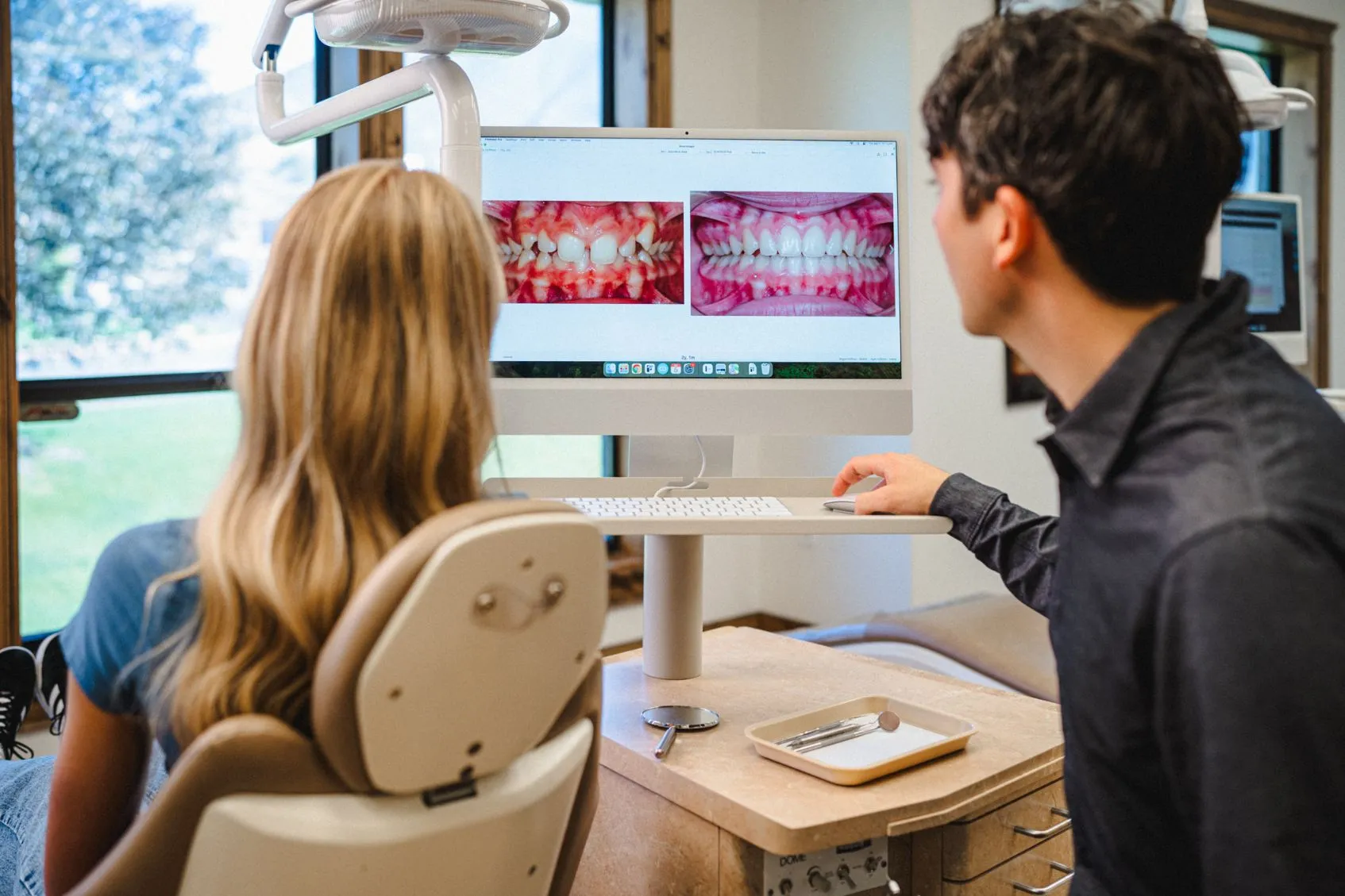
What Is Orthodontic Tooth Movement? The Biology You Can't See
Something remarkable happens beneath your gums when you wear braces or aligners. It's not magic, though the results can feel like it. Moving teeth is a fascinating dance between applied force and your body's natural ability to rebuild itself.
Orthodontic tooth movement is a biological process where controlled force from braces or aligners triggers bone remodeling around tooth roots, allowing teeth to shift into new positions gradually and predictably. When your board-certified orthodontist places braces or you pop in a new set of aligners, you're initiating a living cellular response that reshapes the bone surrounding your tooth roots. This isn't simply pushing teeth through solid bone. It's far more elegant than that.
The real star of the show is the periodontal ligament, or PDL. This thin layer of connective tissue wraps around each tooth root, connecting it to the surrounding bone. Think of it as both a shock absorber and a communication system. When force is applied to a tooth, the PDL compresses on one side and stretches on the other. These changes send signals to specialized cells that either break down or build up bone.
On the pressure side, cells called osteoclasts get to work dissolving bone tissue. On the tension side, osteoblasts deposit new bone to fill the space left behind. This push-and-pull process, the same science behind tooth movement that orthodontists have refined for decades, allows teeth to migrate through the jaw in a controlled, predictable way.
What surprises many people is that this movement isn't mechanical at all. Your teeth aren't being shoved through rigid bone like a nail through wood. Instead, you're experiencing a sophisticated biological response to sustained, gentle force.
The bone literally remodels itself around your moving teeth. Our orthodontists in Ogden, Farr West, and Morgan use this biological understanding to design treatment plans built around your specific anatomy, working with your body rather than against it.
How Braces and Aligners Apply Force to Move Teeth Step by Step
Understanding how your appliances actually work can make the whole treatment process feel less mysterious. Whether you choose traditional braces or clear aligners, both systems trigger the same biological bone remodeling. They just deliver force in different ways.
How Do Braces Work?
With braces, your orthodontist bonds small brackets to each tooth and threads an archwire through them. The wire wants to return to its original shape, and this memory creates continuous light pressure on your teeth. Elastic ties or self-ligating mechanisms hold the wire in place while allowing controlled movement.
Here's the step-by-step process:
- Artistic placement. Brackets are bonded to teeth at precise positions to control movement direction. Where your orthodontist places each bracket matters enormously for the final result.
- Archwire engagement. A shaped wire threads through the brackets, applying initial force to begin tooth movement.
- Pressure response. The PDL compresses on one side, triggering osteoclast activity. This is the cellular chain reaction that makes everything possible.
- Bone resorption and tension response. Osteoclasts dissolve bone in the direction of movement while the stretched PDL on the opposite side signals osteoblast activity.
- Bone deposition. New bone fills in behind the moving tooth, stabilizing it in its new position.
- Wire changes. Progressively stiffer wires continue guiding movement at each appointment.
- Refinement. Final adjustments fine-tune tooth positions for a harmonious smile arc.
How Do Clear Aligners Work?
Spark aligners take a different approach. Instead of continuous force from wires, they use a series of custom thermoplastic trays. Each tray is slightly different from the last, applying incremental pressure that moves teeth in small stages.
The process looks like this:
- Digital scanning. 3D images map your current tooth positions.
- Treatment planning. Software designs the sequence of movements, and your orthodontist reviews every stage.
- Tray fabrication. Custom aligners are created for each stage.
- Wear cycle. Each tray is worn for one to two weeks before switching.
- Attachment placement. Small tooth-colored bumps provide grip for difficult movements.
- Sequential pressure. Each new tray applies fresh force as teeth shift.
- Progress monitoring. Regular check-ins ensure treatment stays on track.
Why Is Optimal Force Important?
Here's something crucial: force must stay within an optimal range. Too much pressure can damage tooth roots, a condition called root resorption. Too little force won't trigger enough cellular activity to move teeth effectively. Your orthodontist calibrates this carefully throughout treatment.
Benefits of Understanding the Science Behind Your Orthodontic Treatment
Understanding the science behind tooth movement improves treatment compliance, sets realistic expectations, reduces anxiety about normal sensations, and helps you recognize warning signs during orthodontic care. Knowing what's happening inside your mouth genuinely changes how you approach treatment for the better.
Why Does Understanding Tooth Movement Improve Compliance?
Better compliance leads to better results. People who understand why they need to wear aligners for 20-22 hours daily are more likely to actually do it. Those who grasp why appointments matter show up consistently. This compliance directly impacts treatment success.
The biological process of bone remodeling simply cannot be rushed safely. Knowing this helps you understand why your treatment timeline exists. Your orthodontist isn't being overly cautious. They're protecting your long-term dental health. And when you can identify issues early, like excessive pressure, loose brackets, or ill-fitting aligners, you know to call your orthodontist right away. Catching problems early keeps treatment on track.
How Does Knowledge Reduce Treatment Anxiety?
That pressure you feel after an adjustment? It's the inflammatory response that kicks off bone remodeling. It's not damage. It's progress. Understanding this difference can turn discomfort from worrying to reassuring.
Many people also wonder why they need retainers after treatment. The answer lies in biology. Bone needs time to fully stabilize around your newly positioned teeth. This process takes at least 12 months, often longer. Skipping retention means risking all your hard work.
The American Association of Orthodontists emphasizes that patient education and compliance are among the most significant factors influencing treatment outcomes. When you understand the "why" behind instructions, you're more likely to follow them.
Braces vs. Clear Aligners: How Each System Moves Teeth Differently
Choosing between braces and aligners often comes down to lifestyle preferences. But understanding the mechanical differences can help you make a more informed decision with your orthodontist.
The table below compares how braces and clear aligners differ in force delivery, visibility, compliance, and ideal use cases.
| Factor | Braces | Clear Aligners |
|---|---|---|
| Force delivery | Continuous, multi-directional | Sequential, staged |
| Best for | Complex rotations, vertical movements, severe crowding | Mild-moderate crowding, spacing, certain bite issues |
| Visibility | Visible brackets and wires | Nearly invisible when worn |
| Removability | Fixed throughout treatment | Removable for eating and cleaning |
| Compliance dependency | Built-in (always working) | Patient-dependent (must be worn 20-22 hrs/day) |
| Adjustment method | Wire changes at appointments | New trays every 1-2 weeks |
When Do Braces Excel?
Braces deliver continuous multi-directional force, making them particularly effective for:
- Severe crowding that requires significant tooth movement over many months
- Complex rotations of rounded teeth like canines, which need grip points to turn properly
- Vertical movements (pushing teeth up or pulling them down)
- Closing extraction spaces
- Correcting significant bite discrepancies
The artistic placement of braces allows your orthodontist to position brackets more gingivally, achieving a harmonious smile arc that complements your facial features. This is where precision meets creativity in the treatment process.
When Do Aligners Shine?
Clear aligners work beautifully for:
- Mild to moderate crowding
- Spacing between teeth
- Certain bite corrections that don't require complex vertical movement
- Those who prioritize aesthetics during treatment
- Those with strong compliance habits who can commit to the 20-22 hour daily wear requirement
Aligners rely on attachments, small tooth-colored bumps bonded to specific teeth, to grip and move teeth that would otherwise be difficult to control with smooth plastic alone.
What Do Braces and Aligners Have in Common?
Here's what matters most: both systems trigger the exact same biological bone remodeling process. The osteoclasts and osteoblasts don't care whether force comes from a wire or a plastic tray. They respond to pressure the same way. Your board-certified orthodontist can help you weigh these differences based on your specific needs.
Treatment duration is often comparable for appropriate cases. The complexity of your specific situation, not the appliance type, typically determines how long treatment takes.
What Factors Influence Orthodontic Treatment Timelines and Complexity?
Orthodontic treatment timelines depend on malocclusion severity, patient age, bone density, compliance with wear instructions, and individual biological response. Understanding how braces move teeth, and the factors that speed up or slow down that process, helps set realistic expectations from day one.
"How long will this take?" It's one of the most common questions we hear. The honest answer depends on several factors, some within your control and others determined by biology.
How Does Malocclusion Severity Affect Treatment Time?
The starting point matters significantly. Minor crowding requires less tooth movement than severe crowding. A slight overbite corrects faster than a significant one. Your orthodontist assesses this during your initial evaluation and provides a treatment plan based on your specific needs.
Does Age Affect How Quickly Teeth Move?
Younger members of our orthodontic family often respond faster to orthodontic treatment. Their bones are still growing, and the remodeling process happens more readily. This doesn't mean adults can't achieve excellent results. They absolutely can. The process may simply take a bit longer.
Bone density varies between individuals regardless of age. Some people's biology naturally supports faster remodeling. Others take more time. This isn't something you can control, but it's something your board-certified orthodontist accounts for in your treatment plan.
How Does Compliance Impact Treatment Progress?
For aligner wearers, compliance is everything. Wearing trays for 20-22 hours daily keeps consistent force on your teeth. Taking aligners out too often or for too long allows teeth to drift back, extending treatment time.
Braces wearers have built-in compliance since the appliances stay on. But keeping appointments, maintaining good oral hygiene, and avoiding foods that damage brackets all impact progress.
Why Do Similar Cases Progress at Different Rates?
Here's a reality that can be frustrating: two people with seemingly identical cases can progress at different rates. Cellular activity varies between individuals. Some bodies remodel bone faster than others. Your orthodontist monitors your progress and adjusts treatment as needed.
Advanced techniques like TADs or airway-focused treatment may add stages to your plan. These additions aren't padding. They're addressing specific concerns that improve your long-term outcomes. Sometimes the best path isn't the shortest one.
How Does Treatment Complexity Relate to Cost?
It's worth noting that the science behind your treatment directly influences cost. More complex tooth movements, like correcting severe crowding or significant bite issues, require more appointments, more materials, and more time. Simpler cases with mild spacing or minor alignment concerns typically involve fewer stages and lower overall investment. Your orthodontist walks you through exactly what your case involves during your initial evaluation so there are no surprises.
Who Benefits from Orthodontic Treatment? Candidacy at Every Age
Orthodontics is for everyone. The American Association of Orthodontists recommends that children have their first orthodontic evaluation by age 7. But candidacy extends across the entire lifespan.
Who Benefits at Ages 7 to 10?
Early orthodontic treatment evaluation doesn't always mean early treatment. Often, your board-certified orthodontist will monitor growth and development, waiting for the optimal time to begin. Some conditions do benefit from early intervention, though:
- Crossbites that could affect jaw development if left untreated during growth
- Severe crowding that may require guided eruption
- Harmful habits like prolonged thumb sucking
- Early or late loss of baby teeth, which can signal spacing or eruption concerns
Early treatment can guide jaw growth and potentially prevent more complex issues later. It's about creating the best foundation for permanent teeth.
Who Benefits During the Teen Years?
The teenage years are ideal for orthodontic treatment. Most permanent teeth have erupted, yet growth is still active. Bone remodeling happens efficiently, and teens typically adapt well to treatment protocols.
This age group often has the most treatment options available. Both braces and aligners work well for appropriate cases. Your teen's specific needs, lifestyle, and preferences all factor into the recommendation your orthodontist makes at our South Ogden, Farr West, or Morgan offices.
Can Adults Get Orthodontic Treatment?
Adult orthodontics is more common than ever. Adults of any age can achieve successful tooth movement. The key requirements are healthy bone and gums. If you've maintained good oral health, orthodontic treatment remains an option whether you're 25 or 65.
Adult treatment may take slightly longer due to denser bone and slower cellular activity. But the biological process works the same way. Many adults who missed orthodontic treatment as teens finally invest in their smiles later in life, and the results speak for themselves.
What Conditions Beyond Crooked Teeth Benefit from Orthodontics?
Orthodontic candidacy isn't limited to crooked teeth. Conditions like gummy smile, airway concerns, or jaw discrepancies may also indicate that orthodontic treatment could help.
Frequently Asked Questions About Orthodontic Tooth Movement
Does Moving Teeth Hurt?
You'll feel pressure, but it shouldn't be truly uncomfortable. That sensation typically peaks within the first day or two after adjustments or new aligner trays, then fades as your body adapts. That's normal. Over-the-counter relievers can help if needed. Severe or persistent discomfort warrants a call to your orthodontist, since it may indicate excessive force.
How Long Does It Take for Teeth to Move with Braces?
Most orthodontic treatments fall within a 12-24 month range, though your specific timeline depends on case complexity. Factors like crowding severity, bite correction needs, and individual bone remodeling rates all influence this range. Your orthodontist will provide an estimate during your initial evaluation, though biological variability means this is always an approximation rather than a guarantee.
Can Teeth Move Back After Treatment?
Yes, and this is why retainers are so important. Bone takes time to fully stabilize around newly positioned teeth. Without retention, teeth naturally drift toward their original positions, which is why most orthodontists recommend wearing retainers consistently for at least the first year, then nightly long-term. Your smile is for life!, and protecting it requires ongoing commitment.
Is Tooth Movement Different for Adults vs. Children?
The biological process is identical. Osteoclasts and osteoblasts work the same way regardless of age. Adult bone is typically denser, though, and cellular activity may be slower. This can extend treatment time compared to younger patients. Adults also need healthy gums and adequate bone support. Conditions like gum disease must be addressed before starting orthodontic treatment.
Why Do I Need to Wear Aligners 22 Hours a Day?
Consistent force is crucial for continuous bone remodeling. When you remove aligners, the pressure stops. If teeth are without force for extended periods, they begin drifting back, and the biological process stalls. The 20-22 hour guideline ensures your teeth experience enough consistent pressure to keep moving according to plan. Removing aligners only for eating, drinking, and oral hygiene maintains treatment momentum.
Every day you wear your braces or aligners, your body is doing something remarkable. Osteoclasts dissolve bone on one side of each tooth root while osteoblasts build new bone on the other. That quiet, invisible process is the science behind tooth movement, and it's reshaping your smile one cell at a time.
Got questions about how this science applies to your teeth specifically? Our orthodontists at Albrechtsen & Fanelli Orthodontics are always happy to walk you through the details. Schedule your freec consult at our Ogden, Farr West, or Morgan location, and let's talk about what your treatment could look like.
Still wondering do you have to wear retainers forever after braces? Our follow-up article explains what long-term retention really looks like day to day.