
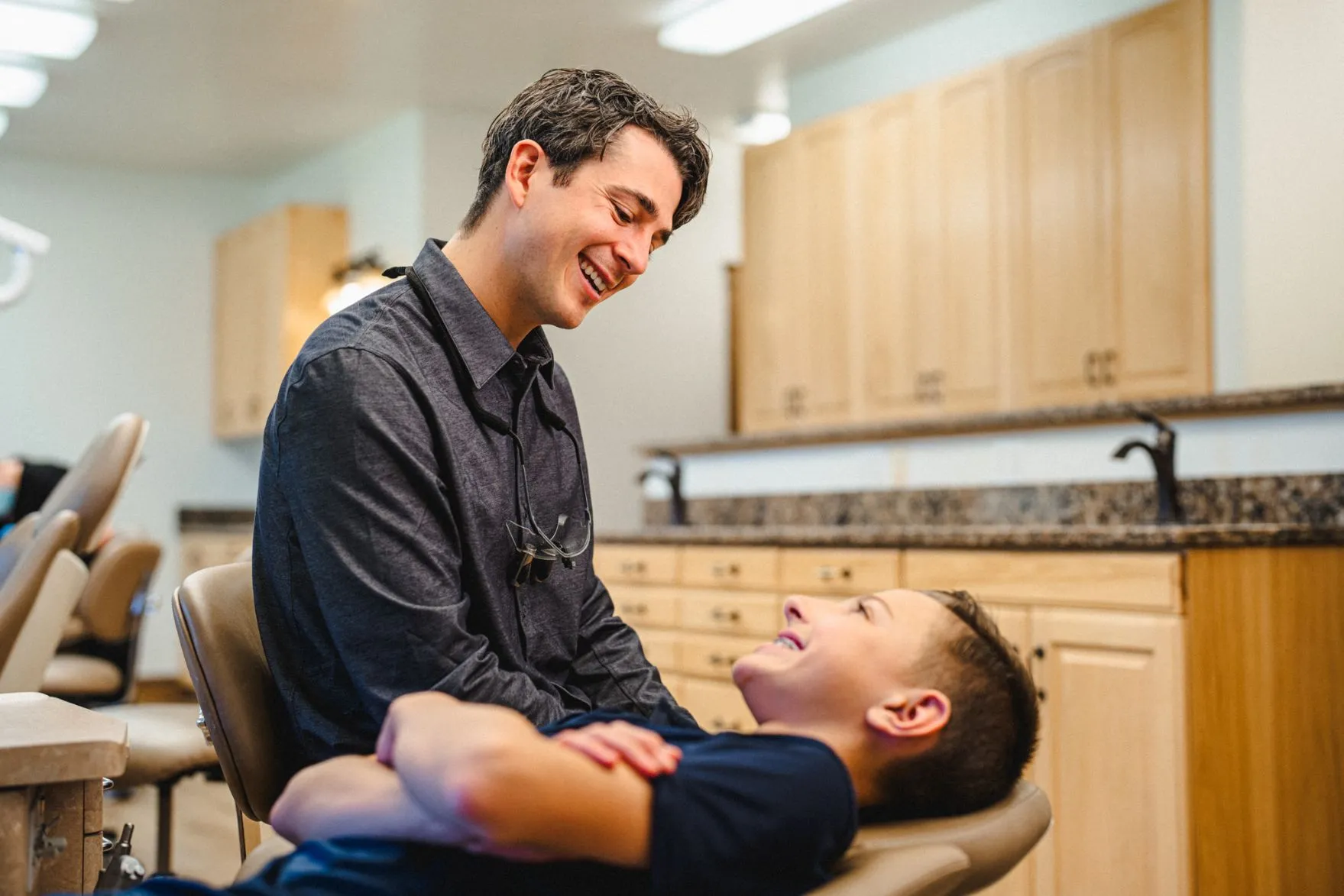
What Is a First Orthodontic Visit and Why Does It Matter?
When you bring your child in for a first orthodontic visit, the goal is straightforward: figure out whether their teeth, jaw, and bite are developing the way they should. The American Association of Orthodontists recommends children have their first orthodontic evaluation by age 7, when a mix of baby and permanent teeth allows board-certified orthodontists to spot developing issues early.
Here's what many parents don't realize: this visit is a no-pressure free consult, not a commitment to braces or any treatment. Many boutique, locally-owned orthodontic practices in Ogden, including Albrechtsen & Fanelli Orthodontics, offer complimentary initial evaluations because every child deserves access to expert assessment.
Early evaluation catches problems like crowding, crossbites, and airway concerns before they become more difficult to correct. That's the whole point. Your child's jaw is still growing at this age, which gives orthodontists more options for guiding development naturally. Even if treatment isn't needed right away, you'll leave with a clear picture of what to expect in the years ahead.
Step-by-Step: What Happens During Your Child's First Orthodontic Appointment
If your child has never been to an orthodontic office before, a little preview goes a long way. Here's how a typical first visit unfolds at Albrechtsen & Fanelli Orthodontics in Ogden.
Arriving and Checking In
The moment you arrive, friendly team members greet your family and help your child feel comfortable. You'll complete a brief intake form covering your child's medical and dental history, including any concerns you've noticed at home.
Digital Imaging and X-Rays
Using 3D scanners and digital X-rays, the team captures detailed images of your child's teeth and jaw. These images reveal tooth positioning, eruption patterns, and bone development. The process is quick, painless, and uses minimal radiation.
The Clinical Exam
A board-certified orthodontist examines your child's bite alignment, spacing between teeth, and overall oral development. They'll also assess airway health, which can affect breathing and sleep quality.
Reviewing Your Child's Results
The orthodontist reviews the X-rays and photos with you, pointing out exactly what they see. You'll understand your child's current development and any areas of concern. No medical jargon, just clear explanations you can actually follow.
Your Personalized Treatment Plan
Based on the evaluation, you'll receive one of three outcomes:
- Treatment now: If early intervention would benefit your child, you'll discuss options and timing
- Monitoring plan: If treatment isn't needed yet, your child joins a complimentary observation program with periodic check-ins
- No treatment needed: Some kids have naturally aligned bites and won't need orthodontic care
You'll never feel rushed or pressured. The focus is giving you the information to make the best decision for your family.
Why Age 7? The Case for Early Evaluation
Early orthodontic evaluation benefits children by catching jaw growth issues, crowding, and airway concerns while bones are still developing. This gives a board-certified orthodontist the widest range of treatment options and can simplify or shorten future care.
Why Does Early Detection Lead to Easier Treatment?
Jaw growth issues, severe crowding, and bite problems respond better to treatment when bones are still developing. What might require surgery in a teenager could be corrected with a simple appliance in a younger child. Early intervention can also create space for permanent teeth to erupt properly, reducing the likelihood that teeth will need to be removed later.
Narrow palates and certain jaw positions can restrict airways, affecting sleep quality and daytime energy. Orthodontists who are trained in airway assessment can spot these issues early, sometimes before a parent or general dentist notices them.
How Can Early Evaluation Reduce Future Costs?
Even if your child doesn't need treatment now, you'll have a plan in place. The orthodontist tracks development at regular intervals and recommends treatment at the moment that makes the most clinical sense. Interceptive treatment may simplify or shorten a later phase of care, potentially reducing total investment. A professional evaluation answers your questions and eliminates guesswork.
First Orthodontic Visit at Age 7 vs. Waiting Until the Teen Years
Many parents wonder whether early evaluation is really necessary or if they should simply wait until all permanent teeth come in. Both approaches have their place, depending on your child's specific situation.
| Factor | Age 7 Evaluation | Waiting Until Teen Years |
|---|---|---|
| Jaw Growth | Can guide active jaw development | Growth largely complete; fewer options |
| Treatment Complexity | A palatal expander at age 8 can prevent the need for jaw surgery later | Full braces handle most alignment and bite issues effectively in one round |
| Intervention Type | Phase 1 treatment if needed | Full treatment in one phase |
| Monitoring | Complimentary observation until ideal timing | No early monitoring |
| Best For | Crossbites, severe crowding, jaw discrepancies | Alignment issues in fully erupted teeth |
An early evaluation doesn't automatically mean early treatment. According to the American Association of Orthodontists, most children evaluated at age 7 don't need immediate intervention. They're simply monitored until the right time.
Certain conditions do respond dramatically better to early treatment. Crossbites, for example, can cause permanent facial asymmetry if left untreated during growth years. Severe crowding may lead to impacted teeth.
What Does a First Orthodontic Visit Cost?
Not a penny. The free consult is complimentary, including X-rays, a clinical exam, and a personalized treatment plan if needed. You're not committing to anything by walking through the door, and the visit is purely diagnostic. Think of it as an opportunity to learn about your child's orthodontic needs without financial pressure.
If treatment is recommended, the team provides a detailed cost breakdown including:
- Total treatment fees
- Insurance benefit estimates
- Flexible payment plan options
- Any available discounts
Many Ogden families are surprised to learn how manageable orthodontic treatment can be with flexible monthly payment plans. Insurance benefits, when available, can significantly reduce out-of-pocket expenses.
Signs Your Child Is Ready for Their First Orthodontic Visit in Ogden
Most children should see a Smile Artist by age 7, but certain signs may prompt an earlier visit. If you notice any of the following, your child could benefit from a professional evaluation sooner rather than later. Here are the most common indicators:
- Your child has reached age 7 or has a mix of baby and permanent teeth coming in
- Visible crowding or spacing as adult teeth erupt
- Crooked teeth becoming noticeable
- Difficulty chewing or complaints about teeth not fitting together properly
- Mouth breathing during the day or while sleeping
- Persistent thumb-sucking or tongue-thrusting habits past age 5, which can reshape the palate over time and affect how permanent teeth come in
- Your child's dentist has recommended an orthodontic evaluation
- Bite problems like an underbite, overbite, crossbite, or open bite
You don't need to check every box. Even one of these signs warrants a professional evaluation. And if everything looks fine, you'll simply gain reassurance and a monitoring plan.
Frequently Asked Questions About Your Child's First Orthodontic Visit
Does My Child Need a Referral from a Dentist?
No referral is needed. While many dentists do recommend orthodontic evaluations, you can book a free consult directly with a boutique, locally-owned orthodontic practice like Albrechtsen & Fanelli Orthodontics anytime you have questions about your child's smile or bite development.
How Long Does the First Appointment Take?
The first appointment typically takes 30 to 60 minutes. This includes time for X-rays, photos, the clinical exam, and a thorough discussion of findings with the orthodontist. You can ask as many questions as you want before you leave.
Will My Child Get Braces at the First Visit?
No. The first visit is evaluation only. Even if treatment is recommended, you'll have time to consider options, ask questions, and make a decision that works for your family. Braces or other appliances are never placed at a free consult.
What Should I Bring to the Appointment?
Bring your insurance card if you have orthodontic coverage, any dental records or X-rays from your child's dentist if easily available, and a list of questions or concerns you've noticed. The team can work with whatever information you have, so don't let missing paperwork stop you from scheduling.
What If My Child Doesn't Need Treatment Yet?
This is actually the most common outcome for 7-year-olds. The orthodontist creates a complimentary monitoring plan, checking your child's development at regular intervals. When the ideal treatment window arrives, you'll be the first to know, and there's no charge for these observation visits.
Your smile is for life! Understanding your child's orthodontic needs early gives you the information to make confident decisions about their care. If you're curious about whether your child could benefit from an evaluation, start creating your new smile today by scheduling a free consult.